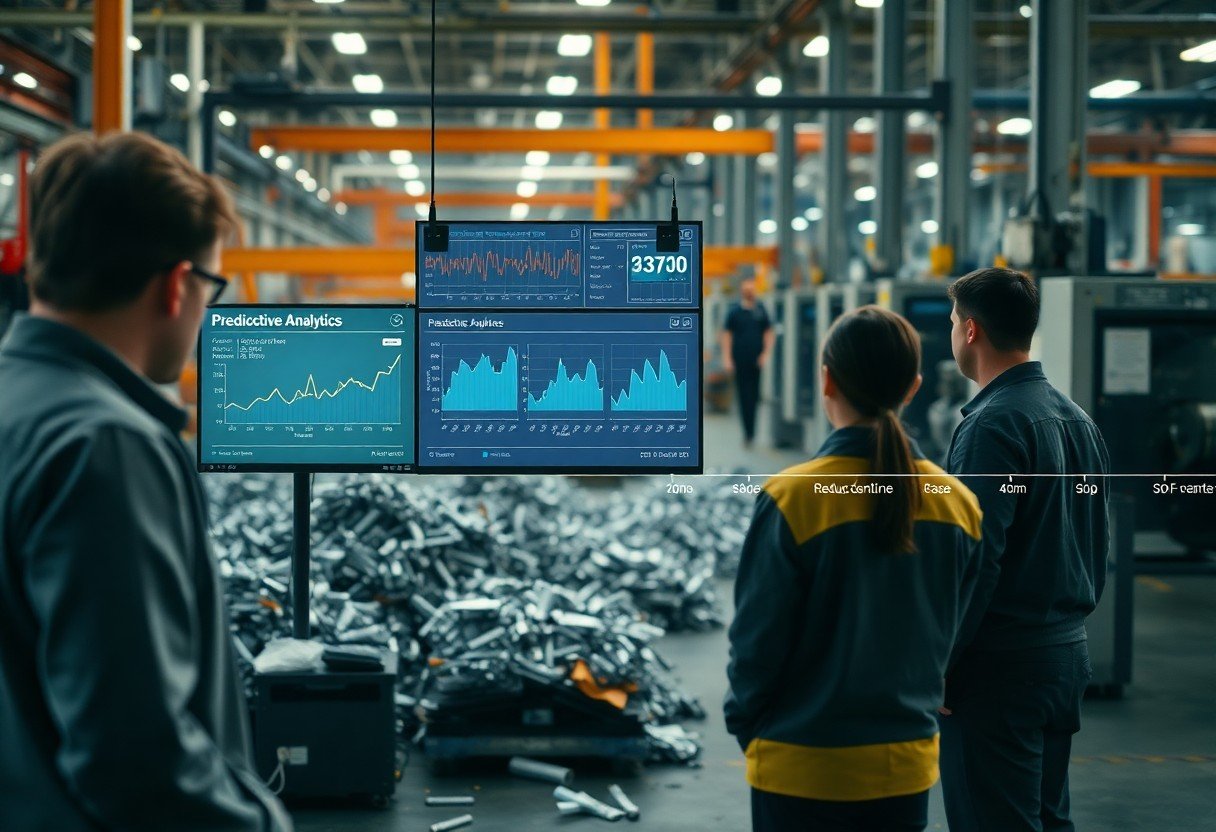
Just as industries strive for efficiency, they face hidden costs associated with scrap, downtime, and variability. He, she, and they often overlook these expenses when relying solely on reactive strategies. Predictive continuous improvement (CI) offers a proactive solution that enables teams to identify and mitigate these inefficiencies before they escalate. This guide explores how adopting predictive CI methodologies can significantly reduce waste and enhance overall productivity, ultimately transforming operations for the better.
Key Takeaways:
- Predictive Continuous Improvement (CI) shifts focus from reactive problem-solving to proactive identification of hidden costs, enhancing overall operational efficiency.
- By analyzing patterns and data, organizations can significantly reduce scrap rates and downtime, leading to cost savings and increased productivity.
- Addressing variability through predictive measures fosters a more stable production environment, minimizing disruptions and ensuring consistent quality.
Understanding Scrap
Scrap represents materials that are discarded during the manufacturing process due to defects, process inefficiencies, or production errors. The waste not only incurs a direct cost but also affects the overall output, signalling deeper systemic issues within a production environment. Identifying and analyzing scrap helps to pinpoint recurring problems and implement solutions to enhance operational efficiency.
Types of Scrap
Different categories of scrap exist, each with its implications on production and cost. These types include:
- Defective Products – Items that do not meet quality standards.
- Excess Material – Surplus that exceeds production needs.
- Non-conforming Materials – Raw materials that fail quality checks.
- Downtime-Related Scrap – Waste generated during machine breakdowns and other disruptions.
- Process-Generated Scrap – Waste resulting from inefficient production techniques.
Assume that each type of scrap incurs not just a financial cost, but also contributes to lost time and reduced morale among workers by distracting from their core tasks.
| Type of Scrap | Typical Causes |
| Defective Products | Poor quality control procedures |
| Excess Material | Poor planning and inventory management |
| Non-conforming Materials | Supplier quality issues |
| Downtime-Related Scrap | Machine malfunctions |
Factors Contributing to Scrap
Numerous factors lead to the generation of scrap, significantly impacting overall production costs and efficiency. Understanding these factors allows teams to address the root causes and implement corrective actions. Common contributors include inadequate training, poor communication, and insufficient maintenance of machinery. Each of these elements can produce a ripple effect, exacerbating scrap generation.
- Inadequate Training – Insufficient knowledge about equipment can lead to mistakes.
- Poor Communication – Lack of clarity between teams can result in misunderstandings.
- Insufficient Maintenance – Machines that are not regularly serviced are more prone to errors.
- Quality Assurance Failures – Flawed inspection processes fail to catch issues early.
- Process Inefficiencies – Outdated methodologies can contribute to increased scrap rates.
The significance of these factors cannot be overstated, as they create a cycle of waste that continually undermines production efforts.
When addressing the factors contributing to scrap, teams must consider systemic changes. They should implement comprehensive training programs that focus on equipment handling and quality assurance, fostering a culture of mindfulness toward resource conservation. Additionally, leveraging predictive analysis could provide insights into machinery performance trends, allowing preemptive actions to reduce downtime and scrap generation.
- Comprehensive Training Programs – Equip employees with necessary skills.
- Regular Communication – Establish clear channels for collaboration.
- Proactive Maintenance Schedules – Ensure continuous machine performance.
- Enhanced Quality Control – Implement stricter inspection protocols.
- Streamlined Processes – Review and refine production methodologies.
The integration of these strategies can substantially decrease the volume of scrap produced, aligning operational goals with waste reduction and efficiency.
Analyzing Downtime
Types of Downtime
Downtime varies significantly in its nature and impact on operational efficiency. Understanding these distinctions allows teams to implement targeted strategies for mitigation. The most common types of downtime include:
| Type | Description |
| Planned Downtime | Scheduled maintenance or upgrades that are necessary for routine operations. |
| Unplanned Downtime | Unexpected failures that disrupt operations and can result in significant losses. |
| Reduced Efficiency Downtime | Operations that continue but at diminished capacity due to constraints or bottlenecks. |
| Changeover Downtime | Time required to switch production lines or adjust machinery for different products. |
| Supplier Downtime | Delays due to suppliers failing to deliver materials or components on time. |
Perceiving these different types allows teams to better quantify lost productivity and develop mitigation strategies tailored to specific causes. Addressing each type effectively can result in significant cost savings and improvements in efficiency.
Factors Leading to Downtime
Numerous factors contribute to downtime, with some being systemic within the production process. Machine failures, human errors, and supply chain disruptions commonly lead to lost productivity. Additionally, inadequate training and unclear operational procedures can exacerbate these issues. Consider the following factors:
- Equipment age and maintenance history affecting performance reliability.
- Employee turnover and the steep learning curve impacting production consistency.
- Insufficient spare parts inventory for rapid response to equipment failures.
- Poorly designed workflows that create bottlenecks during production.
- Inadequate forecasting leading to mismatched supply and demand levels.
The interplay of these factors can create a cascading effect, further extending downtime and escalating costs. Employing predictive analytics provides insights that help mitigate these risks effectively.
To examine deeper, operational teams must analyze historical downtime incidents and correlate them with specific factors. Offering a comprehensive overview of equipment performance could highlight trends that preempt unplanned downtimes. By targeting these areas, they create a focused approach to minimize interruptions. Consider the following aspects:
- Regular assessments of equipment health and performance metrics.
- Continuous employee training and development programs.
- Implementing predictive maintenance schedules based on data-driven insights.
- Enhancing supplier relationships to ensure reliability in the supply chain.
- Investing in advanced inventory management systems to maintain optimal stock levels.
The benefits of such measures extend beyond efficiency to create a culture of continuous improvement within organizations.
Exploring Variability
Types of Variability
Variability in manufacturing processes can stem from several sources, impacting production consistency and efficiency. He noted that they typically classify variability into four main types: demand variability, process variability, supply variability, and material variability. Each type can significantly influence the workflow, leading to increased lead times and unexpected costs if not managed appropriately.
| Type of Variability | Description |
| Demand Variability | Fluctuations in customer orders that can disrupt scheduling |
| Process Variability | Inconsistencies in production methods that affect output |
| Supply Variability | Inconsistencies in supplier performance or quality |
| Material Variability | Variations in raw materials that affect final products |
| External Variability | Market or economic factors impacting production schedules |
He emphasized that identifying these types of variability is important for manufacturers aiming to optimize their processes. Each category requires specific strategies to track, analyze, and mitigate its impact effectively. After establishing these categories, brands can develop targeted approaches to address and minimize variability risks.
Tips for Managing Variability
To manage variability, he recommended several best practices that can streamline operations. Regular auditing of production processes to identify areas of inconsistency is important. Incorporating predictive analytics can forecast demand patterns, allowing for proactive adjustments to supply and inventory levels. Additionally, strengthening relationships with suppliers can mitigate the risk of supply variability by ensuring reliability and quality.
- Utilize advanced data analytics tools to monitor production metrics and forecast variability trends.
- Adopt flexible inventory management systems that can adjust to changing demand patterns.
- Implement quality control measures at every stage of production to minimize process variability.
- Improve communication and collaboration among departments to quickly address emerging issues.
- Develop contingency plans for unexpected disruptions in supply or demand.
By employing these strategies, manufacturers can significantly reduce the negative impacts of variability. Building a culture of continuous improvement encourages teams to remain vigilant against the variability factors. After adopting such practices, manufacturers often find they can maintain production schedules with greater predictability and efficiency.
- Set regular review meetings to analyze performance data and adjust strategies accordingly.
- Encourage a proactive mindset among teams to identify potential variability issues early.
- Train staff on the importance of consistency and quality within their roles.
- Leverage technology to automate tracking and data collection processes.
- Regularly assess external factors that could introduce variability into operations.
Predictive Continuous Improvement (CI)
What is Predictive CI?
Predictive Continuous Improvement (CI) embodies a proactive approach to enhancing operational efficiency by forecasting potential issues before they escalate. It integrates data analytics and machine learning to identify patterns and trends within manufacturing processes, allowing teams to anticipate challenges such as variability in production or upcoming downtime. By employing historical data and real-time insights, organizations can implement timely interventions, significantly reducing scrap rates and avoiding unexpected disruptions.
This method prioritizes a shift from traditional reactive strategies, where issues are only addressed after they manifest. For instance, manufacturers can use predictive analytics to monitor equipment health and predict maintenance needs, thereby streamlining operations and enhancing overall performance. This foresight empowers teams to make informed decisions that align with long-term objectives.
Pros and Cons of Predictive CI
Pros and Cons of Predictive CI
| Pros | Cons |
|---|---|
| Enhances operational efficiency through proactive insights | Requires significant investment in technology |
| Reduces downtime by predicting equipment failures | Data accuracy depends on the quality of historical data |
| Minimizes scrap rates and rework costs | Requires cultural change within the organization |
| Improves decision-making with data-driven strategies | Implementation complexity may pose challenges |
| Facilitates targeted training and development opportunities | Relying too much on technology can overlook human factors |
| Increases customer satisfaction through improved quality | Ongoing maintenance of systems and training is necessary |
| Supports sustainable practices by minimizing waste | Return on investment may take time to realize |
| Encourages continuous learning and adaptation | Inflexibility in adapting to rapid changes in market conditions |
| Strengthens competitive advantage in the marketplace | Potential dependence on specific vendors for solutions |
| Streamlines communication and collaboration across teams | Requires consistent monitoring and updates |
Predictive CI offers a comprehensive framework that balances numerous advantages against potential drawbacks. While the benefits such as reduced waste, improved efficiency, and enhanced customer satisfaction are significant, organizations must also consider challenges like high initial costs and the need for a culture shift. Emphasizing data accuracy and ongoing support can effectively mitigate most disadvantages, ensuring a smoother transition into a predictive-driven environment.
Steps to Implement Predictive CI
Assessing Current Processes
He or she must begin by mapping out existing processes to identify inefficiencies and variability sources. Conducting a detailed process audit can pinpoint areas where downtime and scrap occur, along with how often operational disruptions happen. Utilizing tools such as Value Stream Mapping can reveal bottlenecks and streamline workflows effectively, ensuring that all stakeholders have a clear understanding of the current state.
Additionally, it’s crucial to engage team members to gather insights and firsthand accounts of operational challenges. They often have unique perspectives on variability and downtime that can highlight hidden costs. By focusing on actual workflow data and employee feedback, a comprehensive overview of the current processes emerges, providing a solid foundation for implementing predictive measures.
Incorporating Data Analytics
Integrating data analytics into operations is a pivotal step in transitioning to Predictive CI. He or she should invest in tools that can collect and analyze data from various production stages. These analytics tools facilitate real-time monitoring of key performance indicators (KPIs) such as scrap rates and machine uptime, which in turn supports better visibility into production variabilities. Historical data patterns can be leveraged to forecast potential operational issues, allowing for timely preventive actions.
Effective data integration often involves collaboration across departments. For instance, aligning production, quality assurance, and maintenance data can enhance the predictive capabilities of the analytics. This holistic approach transforms raw data into actionable insights, enabling teams to preemptively address the factors contributing to downtime and inefficiencies.
Training the Team
Equipping the team with the knowledge and skills necessary for predictive methodologies is vital for success. Training should encompass both the technical aspects of new tools and the cultural shift towards proactive problem-solving. Workshops that focus on interpreting data analytics and applying findings to real-world scenarios can foster a more informed workforce that understands the predictive CI framework.
Moreover, ongoing support and advanced training sessions can ensure that team members stay updated on best practices and new developments in predictive analytics. This continuous learning environment not only enhances individual competencies but also strengthens team collaboration, driving a collective commitment to minimizing scrap and downtime.
By prioritizing team training, organizations foster a culture of accountability and engagement. Encouraging team members to share insights and challenges leads to innovative solutions and reinforces the importance of their role in achieving operational excellence.
Hidden Costs of Reactive Teams
Identifying Hidden Costs
Reactive teams often overlook substantial expenses that arise in the wake of unaddressed issues. For instance, when production lines face unexpected downtime, the direct cost may be apparent, but the additional impact on workforce productivity, morale, and customer satisfaction often goes uncalculated. Businesses may witness a 20% increase in operational costs due to the extra hours spent troubleshooting equipment failures rather than proactively maintaining it. This reactive approach leads to escalating repair bills and a ripple effect that can delay shipments and erode trust with clients.
Furthermore, material waste associated with piecemeal fixes compounds these hidden costs. For example, if a faulty machine inaccurately processes materials, leading to high scrap rates, a manufacturer may recognize thousands lost in wasted resources. Thus, when assessing operational health, he must account for the unseen expenses linked to inefficiencies created by a lack of foresight.
Long-term Impacts of Reactivity
The long-term consequences of a reactive approach often manifest in strategic misalignment and decreased competitive advantage. Companies that routinely prioritize immediate fixes over preventive measures may find themselves unable to adapt to market changes or technological advancements. In an industry where adaptability is key, this can result in lost opportunities and a decline in market share, undermining profit margins. A study from the National Institute of Standards and Technology indicated that organizations adopting predictive maintenance strategies saw a reduction in operational costs by up to 25% over five years.
Ultimately, the neglect of proactive tactics can foster a cycle of dependency on quick fixes that stifles innovation. A case involving a mid-sized manufacturing firm illustrated this point when they faced a 15% decline in production efficiency due to frequent equipment failures, which stemmed from over-reliance on reactive maintenance. In the long run, this not only affected yield but also hindered their ability to plan for expansions or improvements effectively.
Conclusion
He emphasizes that companies often overlook the hidden costs associated with scrap, downtime, and variability, which can significantly impact their bottom line. By adopting predictive continuous improvement (CI) strategies, organizations can proactively address these issues before they escalate. Implementing data-driven methodologies allows teams to identify patterns and trends, thereby minimizing waste and improving overall efficiency.
She notes that reactive teams, focused on addressing problems only after they arise, frequently miss these opportunities for cost savings. In contrast, proactive approaches enable them to create sustainable processes, reduce variability, and ultimately enhance productivity. As they leverage predictive CI, businesses position themselves for long-term success by fostering a culture of continuous improvement that targets both immediate challenges and future obstacles.
FAQ
Q: How does predictive CI help reduce scrap in manufacturing processes?
A: Predictive continuous improvement (CI) identifies patterns and potential failure points in the manufacturing process before they lead to scrap. By analyzing historical data and real-time metrics, teams can implement proactive changes to minimize waste, leading to increased efficiency and cost savings.
Q: What role does predictive CI play in minimizing downtime?
A: Predictive CI leverages data analytics to forecast potential machine failures or operational bottlenecks. By addressing these issues preemptively, teams can schedule maintenance and optimize workflows, significantly reducing unplanned downtime and maintaining productivity.
Q: How does variability affect operational efficiency, and how does predictive CI address this issue?
A: Variability in processes can lead to inconsistent product quality and unpredictable performance. Predictive CI utilizes statistical process control and machine learning algorithms to monitor and adjust processes in real-time, effectively reducing variability and ensuring consistent operational output.
No responses yet