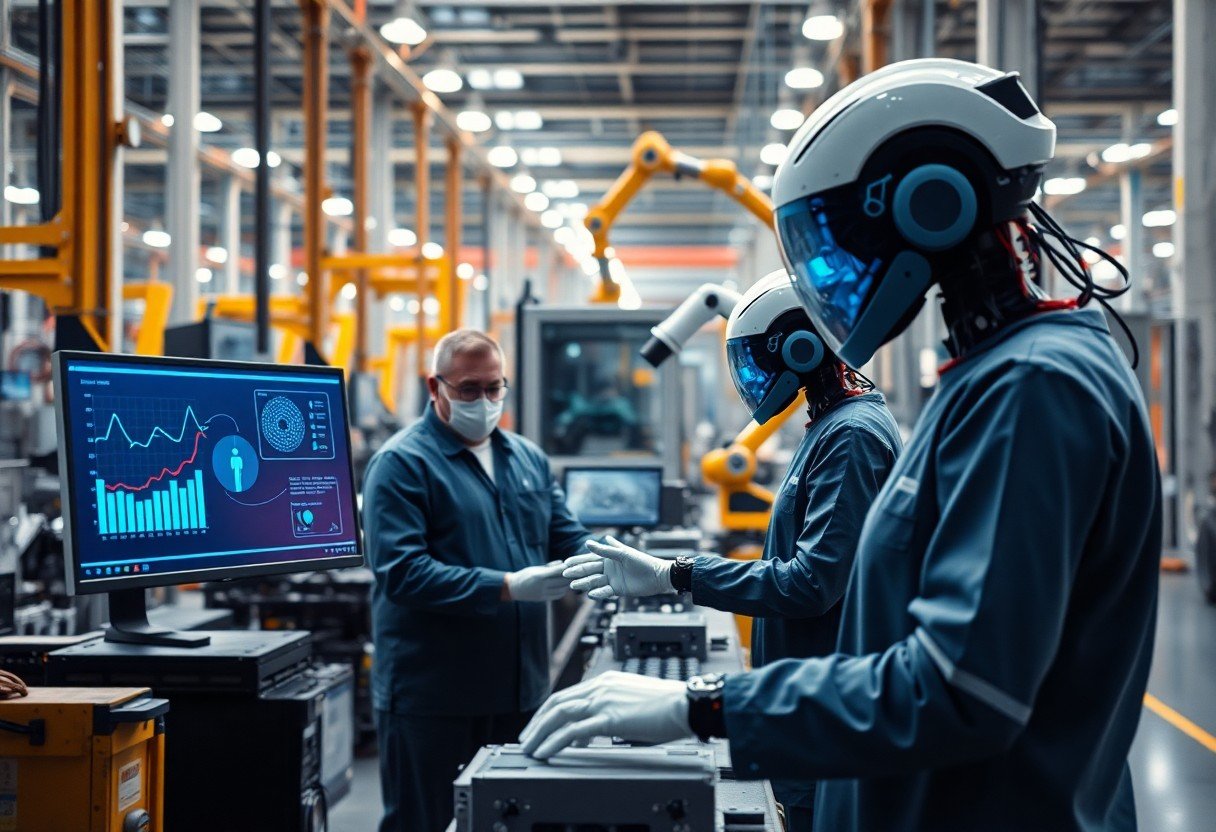
Just as industries adapt to technological advancements, manufacturers are leveraging AIMEDS™ to transform their operations into predictive plants. She highlights how AI and machine learning empower employees by enhancing efficiency and productivity, allowing them to focus on higher-value tasks. He emphasizes that this modernization occurs without the need to replace the existing workforce, fostering a collaborative environment where technology and human expertise coexist. They explore how AIMEDS™ serves as a catalyst for innovation, providing manufacturers with the tools to stay competitive in a rapidly evolving market.
Key Takeaways:
- AIMEDS™ enhances operational efficiency by integrating predictive analytics into existing manufacturing processes.
- The system supports workforce development by providing tools for skill enhancement rather than replacing employees.
- Manufacturers benefit from reduced downtime and improved decision-making, leading to increased competitiveness in the market.
Understanding AIMEDS™
What is AIMEDS™?
AIMEDS™ stands for Advanced Intelligent Manufacturing Execution & Decision System, representing a significant evolution in manufacturing technology. It utilizes predictive analytics and real-time data to enhance production efficiency without necessitating workforce reduction. This system enables manufacturers to derive insights from historical performance and operational data, allowing them to foresee potential production issues before they escalate.
This comprehensive system integrates seamlessly into existing manufacturing environments and processes, providing manufacturers the ability to harness data-driven decision-making. AIMEDS™ creates a feedback loop where operations improve continuously as the system learns and adapts to new data inputs, enabling upgrade without disruption.
Key Features of AIMEDS™
Among the standout features of AIMEDS™ are its advanced data analytics capabilities, user-friendly interface, and seamless integration with existing manufacturing systems. It is designed to support manufacturers in identifying patterns in production data, which can lead to actionable insights that optimize operational workflows.
- Predictive Maintenance: Anticipates equipment failures to reduce downtime.
- Real-time Monitoring: Tracks production metrics in real-time for immediate insights.
- Data Visualization: Offers intuitive dashboards to display critical data effectively.
- Scalability: Grows with the business, accommodating increased production demands.
- Integration Capabilities: Works with legacy systems to enhance rather than replace them.
Any of these features contribute towards a significant reduction in operational costs and an increase in overall productivity, enabling organizations to operate at peak efficiency without the need for extensive retraining of their existing workforce.
The Role of AI in Manufacturing
The integration of AI into manufacturing processes is reshaping the landscape of the industry. By leveraging machine learning algorithms, manufacturers can analyze vast amounts of data, automating decision-making processes that once required human intervention. In this context, AIMEDS™ plays a vital role by translating complex data into actionable insights that allow operators to make informed decisions rapidly.
Furthermore, AI can enhance quality control measures through continuous monitoring and real-time feedback loops, ensuring products meet specifications without extensive manual checks. This symbiotic relationship between AI and manufacturing enables a more agile, responsive production environment that can adapt quickly to market demands.
Any successful integration of AI technologies like AIMEDS™ fosters a collaborative environment where human operators work alongside intelligent systems, enhancing productivity while allowing skilled workers to focus on complex problem-solving tasks rather than routine functions.
Types of Predictive Systems
| Predictive Maintenance | Systems that anticipate equipment failures before they occur, reducing downtime. |
| Demand Forecasting | Tools designed to predict product demand, optimizing inventory levels. |
| Quality Control and Assurance | Analytical methods that ensure product quality through real-time assessments. |
| Supply Chain Optimization | Frameworks that enhance logistics and distribution efficiency. |
| Energy Management | Systems that monitor and analyze energy usage to promote sustainability. |
Thou can observe that predictive maintenance focuses on proactively addressing equipment health, thereby enhancing operational reliability. By leveraging data from various sensors, manufacturers can effectively predict when equipment is likely to fail and schedule maintenance during non-peak hours, significantly reducing unexpected downtimes.
Demand Forecasting
Demand forecasting represents a vital mechanism in the predictive plant paradigm, allowing manufacturers to align production with anticipated market needs. By utilizing advanced analytics, these systems analyze historical data, seasonal trends, and external factors to create an accurate forecast of product demand. This foresight aids in preventing overproduction or stockouts, optimizing inventory management.
Such systems can utilize machine learning algorithms that refine predictions based on incoming data. For instance, as trends fluctuate due to consumer behavior changes or supply chain disruptions, these algorithms adjust forecasts in real-time, empowering organizations to maintain a competitive edge.
Thou should not overlook the importance of demand forecasting as it not only enhances customer satisfaction but also improves financial performance by reducing excess stock and waste. Integrating this capability into manufacturing processes ensures a seamless transition in adapting to market dynamics.
Quality Control and Assurance
Quality control and assurance systems are imperative in maintaining product standards throughout the manufacturing process. By integrating predictive analytics, these systems can detect anomalies and variations that may compromise product integrity. Utilizing historical quality data, they identify patterns that signal potential quality issues before they manifest.
Furthermore, real-time monitoring ties back to the concept of predictive analytics, providing operators with immediate insights on production quality metrics. A manufacturer that uses such methods can continuously refine their processes, ensuring consistently high-quality outputs while minimizing waste and rework.
Thou must recognize that adopting predictive quality control measures leads to greater consistency and reliability in product offerings, ultimately fostering trust among consumers. This integration of technology enhances the traditional quality assurance processes, driving substantial improvements in operational excellence.
Modernizing Manufacturing Processes
Benefits of Modernization
Implementing AIMEDS™ within manufacturing processes significantly enhances operational efficiency, leading to both time and cost savings. Manufacturers witness reduced downtime through predictive maintenance, minimizing disruptions related to equipment failures. This proactive approach not only increases productivity but also extends the lifespan of machinery, generating further economic benefits.
Additionally, modernization fosters a data-driven culture, enabling manufacturers to make informed decisions based on real-time insights. This step towards digitization helps companies remain competitive in an ever-evolving market, allowing them to respond quickly to changing consumer demands and industry standards.
Step-by-Step Guide to Implementing AIMEDS™
Integrating AIMEDS™ into existing manufacturing processes requires a structured approach to maximize effectiveness. The initial step often involves assessing current systems and identifying areas where predictive analytics can drive improvement. Following this, a pilot program can be introduced, allowing manufacturers to test AIMEDS™ in a controlled environment before full-scale implementation.
Further steps include training employees on new technologies, gathering feedback, and making necessary adjustments to the system based on real operational data. Continuous monitoring and iterative improvements ensure that the new technologies align with overall business goals.
Implementation Phases
| Phase | Description |
| Assessment | Evaluate current systems and needs. |
| Pilot Program | Test AIMEDS™ in a defined setting. |
| Training | Educate staff on best practices and usage. |
| Feedback Loop | Collect insights for adjustments and improvements. |
| Full Implementation | Roll out the system across the organization. |
As manufacturers initiate their AIMEDS™ implementation, maintaining clear communication with all team members is vital for success. Providing frequent updates and encouraging employee engagement ensures that challenges are addressed promptly, leading to a smoother transition overall.
Overcoming Resistance to Change
Leaders should emphasize that AIMEDS™ complements the workforce rather than replaces it. By highlighting success stories of companies that have integrated predictive analytics while maintaining their workforce, they can build confidence and reduce resistance to change.
Furthermore, providing opportunities for employees to participate in upskilling initiatives can significantly mitigate feelings of apprehension. When workers see firsthand how AIMEDS™ enhances their productivity and job satisfaction, they are more likely to embrace the change and contribute positively to the transformation process.
Factors Influencing Successful Implementation
- Workforce Adaptability
- Technological Infrastructure
- Management Support
After recognizing the importance of integrating new technologies, manufacturers must consider several key factors that significantly influence the successful onboarding of systems like AIMEDS™.
Workforce Adaptability
Manufacturers face a unique challenge when it comes to the adaptability of their workforce. Workers may initially resist changes, especially if they fear that new technologies will compromise their jobs. However, organizations that prioritize training and education often see remarkable improvements in acceptance. For example, a recent case study revealed that a firm that invested in hands-on workshops for its employees reported a 30% increase in productivity within the first three months of implementation.
Furthermore, it is imperative for manufacturers to foster a culture that embraces innovation rather than fearing it. This can be achieved through transparent communication about the roles of AIMEDS™ in enhancing, rather than replacing, human effort. By involving employees in the implementation process and gathering their feedback, manufacturers can cultivate a sense of ownership that is vital for successful adaptation.
Technological Infrastructure
The existing technological infrastructure plays a pivotal role in the successful implementation of AIMEDS™. Manufacturers must evaluate their current systems to ensure compatibility and scalability. Firms with a robust digital foundation, such as cloud computing capabilities and real-time data analytics, typically face fewer obstacles during integration, enabling more seamless transitions. A notable example includes a mid-sized manufacturer that upgraded its network capabilities before deploying AIMEDS™, leading to a 25% reduction in downtime.
Effective technological infrastructure not only ensures smooth operation but also enhances the overall efficiency of production processes. This can significantly improve data collection methods, allowing for better predictive maintenance and streamlined workflows. With advancements in IoT devices, manufacturers can gather real-time insights, making it easier to apply AIMEDS™ effectively.
Management Support
Successful implementation heavily relies on strong management support. Leaders who champion technological integration inspire confidence among employees, encouraging a collective effort towards modernization. For instance, organizations witnessing a genuine commitment from their managers during the transition often report fewer disruptions and a more positive workplace culture. Companies with aligned visions are better equipped to handle challenges related to change management.
Management’s role extends beyond mere endorsement; they must actively engage with teams, solicit feedback, and address concerns. Such involvement can result in higher adoption rates of new technologies, as employees feel their voices are valued in the decision-making process. By embedding AIMEDS™ into the company’s strategic roadmap, leaders can navigate their firms toward long-term success.
Pros and Cons of AIMEDS™
| Pros | Cons |
|---|---|
| Enhances efficiency in production processes | Initial implementation costs can be high |
| Reduces downtime through predictive maintenance | Potential resistance from workforce due to change |
| Improves data analysis for decision-making | Requires continuous updates and system management |
| Supports sustainability initiatives | May lead to over-reliance on technology |
| Enhances quality control and minimizes errors | Training staff may require significant time investment |
| Provides actionable insights through real-time data | Integration with existing systems can be challenging |
| Facilitates a more agile manufacturing environment | Complexity in managing data privacy and security |
| Enables better resource allocation | Dependence on data accuracy affects outcome reliability |
| Encourages innovation and adaptability | Potential for job displacement if not managed properly |
| Streamlines supply chain management | Performance issues can arise if not properly configured |
Advantages of Using AIMEDS™
AIMEDS™ plays a pivotal role in streamlining manufacturing operations by leveraging advanced analytics and machine learning. Companies that implement this system often witness a significant reduction in operational bottlenecks, with studies indicating efficiency improvements of up to 30%. With enhanced predictive maintenance capabilities, manufacturers can forecast equipment failures and schedule maintenance accordingly, leading to decreased downtime and improved production timelines.
Furthermore, the ability of AIMEDS™ to provide actionable insights transforms data into a valuable asset. Organizations benefit from improved decision-making processes and better resource allocation, enabling them to respond swiftly to market changes. This adaptability fosters innovation and positions them competitively in the industry, ensuring that they can meet consumer demand while minimizing waste.
Potential Drawbacks and Limitations
Despite its myriad advantages, there are potential drawbacks and limitations associated with AIMEDS™. Manufacturing companies may face significant initial investment costs when integrating such advanced technology. Moreover, a transition to this system may encounter pushback from employees who feel uncertain about their roles as automation increases. This resistance, if not properly managed, can hinder smooth implementation and diminish the intended benefits of the system.
Challenges can also arise concerning data privacy and security as manufacturers increasingly rely on collected data for operations. Regular training sessions for staff are another hurdle, as the need for ongoing education can divert resources and time from other critical areas of the business. Careful management of these limitations is crucial for companies looking to fully realize the advantages of adopting AIMEDS™.
Tips for Maximizing AIMEDS™ Effectiveness
- Implement continuous training for employees
- Regularly update data inputs
- Encourage collaboration between teams
- Monitor key performance indicators (KPIs)
- Utilize feedback loops for system improvement
Continuous Training for Employees
The efficacy of AIMEDS™ greatly depends on how well employees understand and utilize the system. Ongoing training programs should cover both the technical aspects of AIMEDS™ and its applications in daily operations. Companies that invest in regular training sessions create a workforce adept at interpreting data analytics, enabling them to make informed decisions that align with predictive insights.
Moreover, hands-on workshops and simulations can help employees navigate real-world scenarios using AIMEDS™, reinforcing their skills and confidence. The integration of new methodologies often necessitates a deeper understanding, and staff who are well-versed in AIMEDS™ can identify innovative ways to leverage its capabilities within their roles. This empowerment often results in increased productivity and job satisfaction.
Regularly Updating Data Inputs
For AIMEDS™ to function at its peak, accurate and timely data inputs are paramount. Without regularly updated information, predictive analytics may produce misleading results, undermining decision-making processes. Establishing a routine for data auditing and validation ensures that the system reflects the most current operational realities.
Additionally, utilizing automation tools to streamline data collection processes can enhance the speed and accuracy of updates. Factoring in diverse data sources, from supply chain dynamics to market trends, also enriches the predictive capabilities of AIMEDS™. Over time, this practice builds a robust database that progressively enhances predictive accuracy and operational efficiency.
Collaboration Between Teams
Cross-departmental collaboration is imperative for harnessing the full potential of AIMEDS™. When teams from production, quality assurance, and supply chain management work together, they can share insights and feedback, creating a comprehensive understanding of how AIMEDS™ influences various aspects of the manufacturing process. This collective approach fosters an environment where innovative solutions can thrive, and challenges can be addressed proactively.
Teams that communicate effectively about AIMEDS™ findings and limitations often discover new efficiencies that might have otherwise gone unnoticed. Fostering an atmosphere of teamwork can further amplify the benefits of predictive analytics, ultimately enhancing the overall productivity and adaptability of the workforce.
Conclusion
Taking this into account, the rise of the predictive plant represents a significant evolution in manufacturing practices, allowing enterprises to harness advanced technologies without the disruption of existing workforces. Through the implementation of AIMEDS™, manufacturers can enhance operational efficiency, reduce downtime, and improve product quality by utilizing predictive analytics. This approach empowers employees by providing them with actionable insights while fostering a collaborative environment where human expertise and technological advancement work hand in hand.
Moreover, as they integrate AIMEDS™ into their processes, companies are better positioned to adapt to market changes and customer demands. The thoughtful adoption of predictive tools ensures that workers remain an integral part of the production process, enhancing their roles rather than replacing them. As the industry moves toward more intelligent manufacturing systems, the partnership between human skills and predictive technologies will likely define the future of productive and sustainable manufacturing environments.
FAQ
Q: What is AIMEDS™ and how does it contribute to the predictive capabilities of a plant?
A: AIMEDS™ is an advanced data analytics platform that enables manufacturers to harness real-time data for predictive maintenance and operational efficiency. By analyzing historical and current data, AIMEDS™ can forecast equipment failures and optimize production processes, allowing manufacturers to enhance productivity while retaining their existing workforce.
Q: How can manufacturers implement AIMEDS™ without disrupting their current operations?
A: AIMEDS™ is designed for seamless integration with existing systems. Manufacturers can gradually implement the platform by starting with specific machinery or processes, allowing employees to adapt and learn the system over time. This approach minimizes disruptions, ensuring that production continues smoothly while the benefits of advanced analytics are realized.
Q: What are the key benefits of leveraging AIMEDS™ for workforce modernization?
A: By utilizing AIMEDS™, manufacturers can enhance decision-making through data-driven insights, improve workforce efficiency by reducing downtime, and provide employees with tools that complement their skills instead of replacing them. This modernization approach helps build a more skilled workforce prepared for future technological advancements while maintaining job security.
No responses yet