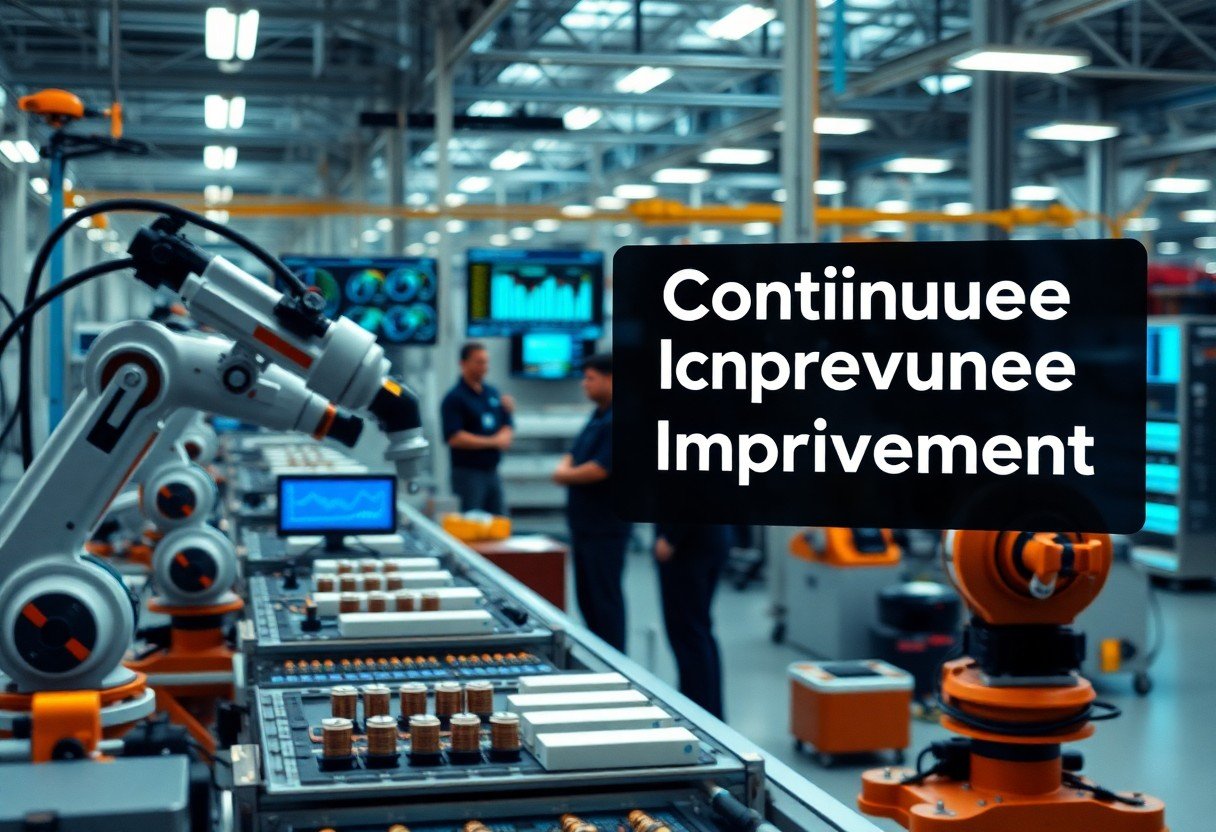
Most organizations today are discovering that traditional continuous improvement methods are no longer enough to maintain a competitive edge. As you navigate the complexities of the modern business landscape, it’s necessary to understand how artificial intelligence can transform your approaches to efficiency and innovation. Embracing AI not only enhances your processes but also prepares your workforce for an evolving future, where adaptability and agility in continuous improvement become paramount. Your ability to leverage these technologies will determine your organization’s success in an increasingly dynamic environment.
Key Takeaways:
- AI enhances traditional lean methodologies by providing data-driven insights that streamline processes and reduce waste.
- Continuous improvement should integrate AI tools to enhance decision-making, facilitate real-time feedback, and optimize operations.
- Organizations must adapt their improvement strategies to leverage AI capabilities for sustained competitive advantage.
The Concept of Lean Methodology
Historical Background of Lean
The origins of Lean methodology can be traced back to the manufacturing practices of Toyota in the post-World War II era, specifically the Toyota Production System (TPS). Faced with limited resources and a need for efficiency, Toyota sought ways to eliminate waste, improve quality, and foster a culture of continuous improvement. This led to the development of Lean principles, which prioritize maximizing value for customers while minimizing waste in production processes. By studying American manufacturing techniques and integrating them with innovative approaches, Toyota was able to revolutionize its manufacturing operations, setting a standard that many industries would later aspire to emulate.
As the concept of Lean matured, it became clear that its principles extend beyond manufacturing. In the 1970s and 1980s, Lean began to gain traction across various sectors, including healthcare, services, and construction. The publication of key texts, such as “The Machine That Changed the World” by James Womack, Daniel Jones, and Daniel Roos, brought Lean concepts to a global audience, illustrating how organizations could benefit from adopting these practices. As a result, Lean began to permeate not just operations but also organizational culture, fostering environments where innovation and efficiency were paramount.
Today, Lean methodology is recognized as a versatile framework for enhancing operational efficiency and value delivery. With advancements in technology and a focus on customer-centricity, Lean principles are continually evolving, adapting to modern challenges while retaining their core values. Companies across various industries leverage Lean to streamline their processes, reduce cycle times, and enhance overall performance, proving that the foundational ideas of Lean remain relevant in an ever-changing business landscape.
Key Principles of Lean
At the heart of Lean methodology are five key principles that guide organizations toward achieving operational excellence. The first principle is to identify value from the customer’s perspective. Understanding what constitutes value for your customers allows you to tailor your processes to meet their needs effectively. The second principle emphasizes the value stream, which entails mapping out all steps in a process to visualize and eliminate any steps that do not add value. This streamlining is necessary to enhancing overall efficiency.
The third principle focuses on the importance of creating flow in processes. By ensuring that value-creating steps occur in a tight sequence, you reduce waiting times and enhance responsiveness to customer demands. The fourth principle, establishing pull, shifts the focus to producing only what the customer wants when they want it, thereby reducing excess inventory and minimizing waste. Finally, the fifth principle encourages striving for perfection through continuous improvement, fostering an organizational culture that embraces iterative progress rather than settling for the status quo.
These principles are not just theoretical ideals; they are actionable strategies that lead to measurable outcomes. For instance, companies that successfully implement Lean principles have recorded remarkable improvements in production efficiency and customer satisfaction. For you, applying these principles in your organization could mean identifying bottlenecks that slow down operations, leading to enhanced productivity and better allocation of resources.
Benefits of Lean Implementation
Implementing Lean methodology offers a multitude of advantages that can significantly impact your organization. One of the most notable benefits is the reduction of waste, which not only translates to cost savings but also drives greater efficiency in operations. By systematically identifying and eliminating wasteful practices, you create a streamlined process that prioritizes value delivery. This efficiency often results in shorter lead times and the ability to respond more flexibly to customer demands, enhancing overall customer satisfaction.
Another key advantage of Lean implementation is the improvement in product quality. By fostering an environment of continuous improvement and adhering to Lean principles, you cultivate a culture of accountability and proactive problem-solving. Teams become empowered to identify issues, thereby leading to faster resolution and higher quality outputs. This not only strengthens your brand reputation but also boosts customer loyalty, as you consistently meet or exceed their expectations.
Lean implementation also enhances employee engagement and morale. When you involve employees in the process of identifying inefficiencies and crafting solutions, you empower them and instill a sense of ownership in their work. This collaborative approach fosters innovation and often leads to solutions that might not have been evident to management alone. Consequently, businesses that embrace Lean practices tend to enjoy lower turnover rates and a more committed workforce.
Ultimately, the benefits of Lean implementation are substantial, extending beyond mere efficiency gains to encompass improved quality and heightened employee engagement, all of which contribute to a more competitive and resilient organization.
The Rise of Artificial Intelligence
Overview of AI Technologies
Artificial Intelligence (AI) encompasses a range of technologies that enable machines to simulate human-like cognition. At the core of these technologies are machine learning and deep learning, which allow systems to analyze vast datasets, identify patterns, and enhance their performance over time. Machine learning algorithms learn from data inputs, improving their accuracy without the need for explicit programming. Deep learning, a subset of machine learning, employs neural networks to process complex data, mimicking the way the human brain operates. This means you can leverage these technologies to drive decisions and automate processes in ways that were previously unimaginable.
The proliferation of natural language processing (NLP) tools has transformed how you interact with machines. NLP enables computers to understand and respond to human language, facilitating applications like chatbots, voice recognition, and sentiment analysis. Innovations such as computer vision allow machines to interpret and understand visual information, making advancements in areas like facial recognition and autonomous vehicles. These technologies combine to create sophisticated AI solutions that can enhance productivity and efficiency in various contexts.
Emerging AI technologies such as quantum computing promise to revolutionize the field further. With its ability to process information at unprecedented speeds, quantum computing could significantly boost capabilities in complex problem-solving areas like drug discovery and logistics optimization. As AI technologies evolve, your ability to leverage these tools for continuous improvement in your processes becomes not only beneficial but necessary to stay competitive.
Impact of AI on Various Industries
In healthcare, AI is redefining patient care and diagnostics. Machine learning algorithms analyze medical records and imaging data to identify potential health issues, allowing for earlier interventions. Systems like IBM Watson have demonstrated their potential by throwing light on treatment options for complex diseases like cancer, saving both time and resources in clinical settings. You may see upfront improvements in how healthcare providers manage patient outcomes and operational efficiencies, fundamentally reshaping the industry.
The financial sector has not been immune to AI’s transformative effects. Automated trading systems, powered by sophisticated algorithms, analyze market trends in real-time, enabling rapid investment decisions. Fraud detection systems utilize AI to monitor transactions, improving security by identifying anomalies that a human might miss. This technology allows financial institutions to streamline operations, providing quicker and more accurate services to customers, significantly altering customer perceptions of trust and efficacy.
Manufacturing is experiencing a revolution thanks to AI-driven automation. Predictive maintenance technologies enable machinery to forecast failures before they occur, reducing downtime and maintenance costs. Industrial robots equipped with machine learning capabilities adapt their tasks to optimize output in ways that standard programming cannot achieve. The integration of AI in this sector not only enhances productivity but also leads to safer work environments, proving that AI’s impact extends beyond mere efficiency improvements.
Across these industries, the benefits of AI manifest in significant operational improvements and cost reductions. Companies are increasingly recognizing the necessity of integrating AI to remain relevant, driving the need for continuous innovation and adaptation.
AI as a Driver of Transformation
AI acts as a catalyst for organizational transformation, driving changes that enhance productivity and promote a culture of innovation. You can implement AI solutions that facilitate data-driven decision-making by transforming how information is processed. For instance, predictive analytics allow you to anticipate market trends, thereby reshaping strategy formulation and resource allocation. This data-centric approach leads to more agile and responsive business models, allowing you to pivot quickly in the face of emerging challenges.
As companies embrace AI, they experience a shift in their operational structures. Organizations that once relied heavily on manual processes are transitioning towards automation, freeing up human resources for higher-value tasks. In customer service, AI-powered chatbots can handle routine inquiries efficiently, allowing human agents to focus on complex issues that require critical thinking and emotional intelligence. Such a restructuring not only enhances operational efficiency but also improves employee satisfaction by minimizing monotonous tasks.
The ripple effects of AI extend beyond your organization into the broader economy. As businesses adopt AI technologies, they stimulate innovation ecosystems that foster collaboration between tech companies, educational institutions, and startups. This collaborative environment leads to creating new markets and job roles that didn’t exist before, highlighting your organization’s role in fostering a conducive landscape for economic growth.
Your ability to leverage AI as a transformative force positions you not just as an adopter of technology but as a leader in driving change within your industry.
Linking AI and Lean Practices
Enhancing Operational Efficiency with AI
Integrating AI into your lean practices enables you to streamline operations significantly. AI technologies, such as machine learning algorithms and predictive analytics, analyze vast amounts of data to identify inefficiencies you might overlook. For instance, a manufacturing plant utilizing AI-driven systems can optimize production schedules by assessing real-time data, ensuring machine utilization is at its peak and reducing downtime. This leads to a measurable increase in productivity and a noticeable decrease in operational costs.
Your focus on waste reduction aligns perfectly with AI capabilities. By employing AI tools to continuously monitor processes, you can detect anomalies faster than traditional methods allow. This proactive approach not only helps in managing resources efficiently but also enhances product quality and reduces rework. Companies that have adopted AI for operational efficiency have reported productivity improvements of up to 30%, highlighting the tangible benefits of this technology.
AI also empowers you to implement advanced inventory management techniques. With AI algorithms analyzing historical demand data, you can forecast needs with greater accuracy, minimizing excess inventory and cutting holding costs. This strategic alignment between AI and lean methodologies ensures you maintain just-in-time inventory levels while simultaneously enhancing customer satisfaction through quicker response times.
Data-Driven Decision Making
The shift to data-driven decision-making is transformative for organizations embracing AI and lean practices. You now have access to analytics that enable precise assessments of operations and employee performance. For example, predictive analytics can reveal trends over time, allowing you to adjust strategies proactively. This analytical foresight equips you to make informed decisions that align with your lean philosophy of continuous improvement.
Implementing AI to collect and process data also enhances your ability to measure key performance indicators (KPIs). By analyzing real-time data, you can identify performance gaps and address them promptly, rather than relying on retrospective evaluation. This level of insight means that your decisions are based on current evidence rather than historical intuition, paving the way for your organization to stay agile and competitive.
Furthermore, AI’s capacity for integrating diverse data sources gives you a comprehensive view across departments. By synthesizing information from production, sales, and customer feedback, you can identify inefficiencies and areas for improvement on a grand scale. This holistic perspective aligns with the lean approach of considering the entire value stream, enhancing both internal processes and customer experiences.
As the reliance on data grows, ensuring data integrity and the ability to act quickly on insights becomes vital. Your organization’s agility in adapting to changing market demands hinges on leveraging data analytics, ultimately allowing you to maintain a competitive edge.
Automating Continuous Improvement Processes
Automation powered by AI serves as a game-changer for continuous improvement in your organization. Utilizing AI technologies, you can simplify processes, reduce the need for manual input, and minimize human error. For example, automating quality control through machine vision systems equipped with AI can detect defects at a speed and accuracy that far surpasses human capabilities. This ensures adherence to strict quality standards while freeing your team to focus on more strategic tasks.
Moreover, AI facilitates a continuous feedback loop in improvement cycles. As processes are automated, performance data is collected in real time, providing insights for necessary adjustments or process reengineering. You can adopt an iterative approach that allows for regular updates based on actionable data. This real-time feedback promotes a culture of innovation and responsiveness, necessary in today’s fast-paced, competitive landscape.
Furthermore, the automation of reporting can transform how you communicate metrics and progress within your organization. By leveraging AI tools for data visualization, stakeholders can understand complex datasets at a glance, helping to motivate and engage your team in continuous improvement efforts. This accessibility ensures that everyone is aligned with organizational goals and actively contributes to enhancing processes.
Enhancing your continuous improvement landscape with AI and automation means your organization can respond to challenges more effectively and efficiently, reinforcing a commitment to excellence.
Challenges in Merging AI with Lean
Cultural Resistance to Change
Cultural resistance often manifests as skepticism toward new technologies, particularly when they threaten established practices. Employees might feel that AI undermines their roles, leading to fears of job displacement. This sentiment can stall the implementation of AI tools imperative for Lean processes. Snowballing concerns may create divisions between management and staff, hampering constructive dialogue about the benefits of AI integration. As a result, the organization can become mired in inertia, causing potential advancements to be overlooked.
Case studies reveal that when organizations proactively address cultural resistance, outcomes improve significantly. Engaging in open discussions about AI’s role in enhancing human efforts can bridge gaps in understanding. Training programs that emphasize AI as a supportive tool rather than a replacement can help reshape perceptions. Your organization’s leadership should model this approach, demonstrating how Lean principles can coexist with AI advancements to drive efficiency and innovation.
Fostering a culture that embraces change requires a clear vision and consistent communication. Encouraging pilot projects that illustrate successful AI applications within Lean frameworks can build confidence and reduce anxiety. Highlighting tangible results, like increased efficiency or reduced waste, showcases the potential benefits. You can cultivate an environment where employees see AI as an ally in their work, facilitating a smoother transition toward a future where AI-enhanced Lean practices thrive.
Data Quality and Integrity Issues
Data quality plays a pivotal role in the success of AI applications within Lean methodologies. Inaccurate, incomplete, or outdated data can lead to flawed insights, ultimately hindering the decision-making process. When your organization lacks reliable data sources, you risk undermining both Lean principles and AI capabilities, creating a feedback loop of inefficiency. Establishing stringent data governance frameworks is imperative to mitigate these risks and ensure consistent data integrity across platforms.
Investing in tools that assess and enhance data quality can yield exponential benefits. For example, the implementation of advanced data cleansing algorithms can identify inaccuracies and inconsistencies. By routinely auditing your data, you ensure that AI algorithms operate on a solid foundation. Without data you can trust, AI will struggle to produce meaningful outputs, leading to skepticism about its role in Lean initiatives.
Prioritizing data quality management creates a culture of accountability, where team members recognize the importance of reliable data. Implementing a feedback loop enhances ongoing efforts to refine data collection processes. You can encourage a collaborative atmosphere where departments share insights and rectify data discrepancies, paving the way for more accurate analytics. The synergy between high-quality data and Lean practices creates a powerful engine for continuous improvement.
Integration with Existing Systems
The seamless integration of AI tools with your existing Lean systems is often fraught with complexities. Legacy systems may lack the flexibility required to accommodate advanced AI solutions, leading to associated costs and implementation delays. In many instances, organizations grapple with siloed data and incompatible systems, which obstruct smooth communication channels. When AI is not able to draw from a unified data source, effectiveness and efficiency suffer. Establishing a clear roadmap of current system capabilities is vital for determining integration requirements.
Investing in middleware solutions can help bridge the gap between AI technologies and existing systems. Middleware acts as a translator, ensuring that the AI can communicate effectively with legacy platforms. For instance, implementing API-based connectivity may allow various systems to share data dynamically, enabling real-time analytics imperative for Lean processes. You save both time and resources by ensuring that data flows seamlessly across all areas of your operations.
Collaboration between IT teams and operational staff is imperative during integration efforts. Continuous feedback allows both parties to address potential issues proactively, refining processes as necessary. Engaging external experts who specialize in system integration can provide additional assurance, helping you align technology investments with operational objectives. The smoother the integration, the better positioned your organization will be to leverage AI for Lean initiatives.
Case Studies of AI in Lean Environments
- General Electric (GE): Reduced manufacturing defects by 75% using AI-driven analytics, resulting in a savings of $1 billion annually.
- Toyota: Implemented machine learning models that improved assembly line efficiency by 20%, cutting production time by 15%.
- Caterpillar: Enhanced predictive maintenance using AI, decreasing unscheduled downtime by 40% and saving about $500 million over five years.
- Unilever: Leveraged AI for supply chain insights, achieving a 30% reduction in logistics costs through better demand forecasting.
- Procter & Gamble (P&G): Improved product development cycles with AI-driven simulations, reducing time to market by 25%.
Manufacturing Sector Examples
Your experience in the manufacturing sector can greatly benefit from the integration of AI within Lean environments. For instance, General Electric utilized AI-based analytics to achieve a remarkable reduction in manufacturing defects by 75%. This achievement not only enhanced product quality but also translated into savings of approximately $1 billion annually. By systematically analyzing production data and learning from previous cycles, GE was able to pinpoint errors and implement solutions across their numerous production facilities.
Toyota, well-known for its Lean practices, further demonstrated the power of AI by implementing machine learning models that significantly improved efficiency on the assembly line. These models increased productivity levels by 20% while reducing overall production time by 15%. This example underscores how AI tools can complement your Lean practices, automating data-driven decision-making processes and enhancing the visibility of inefficiencies that might otherwise go unnoticed.
Another noteworthy example comes from Caterpillar, which embraced AI to enhance predictive maintenance across its machinery. By implementing AI algorithms, the company reduced unscheduled downtime by 40%, yielding savings upwards of $500 million over a five-year period. This transition not only reflects a shift towards a more data-centric operational model but also highlights how AI can integrate seamlessly with existing Lean methodologies, creating a more robust manufacturing environment.
Service Industry Applications
The service industry stands to gain immensely from adopting AI alongside Lean principles. Take Unilever, for example. By embracing AI-driven insights for supply chain management, the company achieved a 30% reduction in logistics costs through improved demand forecasting. This transformation illustrates how refining operations through AI can bolster Lean approaches, ensuring that resources are utilized effectively while meeting changing customer demands.
Moreover, companies like Amazon exemplify the successful intersection of AI and Lean in service delivery. By employing machine learning algorithms for inventory management, Amazon minimizes its carrying costs and enhances its responsiveness to market fluctuations. This efficient system has helped them maintain a competitive edge by ensuring rapid delivery times and elevated customer satisfaction rates, further integrating Lean with technological advancements.
In essence, the application of AI in the service industry not only streamlines operations but also enhances overall customer experience. As organizations implement AI technologies, you can witness the evolution of traditional Lean methodologies into more dynamic, responsive systems that actively anticipate and react to market needs.
Healthcare Transformations
In healthcare, the amalgamation of AI with Lean methodologies has led to transformative outcomes. For instance, the application of AI algorithms in analyzing patient data has enabled hospitals to reduce patient wait times by as much as 30%. By accurately predicting patient flow and optimizing staffing schedules, healthcare facilities can enhance operational efficiencies significantly. This integration directly contributes to improved patient experiences, which is vital in an industry that thrives on quality care.
Mount Sinai Health System in New York serves as a prime example of how AI can aid in Lean healthcare practices. They implemented an AI-driven patient triage system that streamlined operations in emergency departments, reducing the time from patient arrival to treatment by 15%. This initiative not only enhanced the overall care delivery but also optimized resource allocation, showcasing how AI fosters continuous improvement in such a dynamic environment.
Furthermore, AI has the potential to minimize medical errors, a critical concern in healthcare settings. By leveraging predictive analytics, medical institutions are identifying risks ahead of time, thereby increasing patient safety. These proactive measures align seamlessly with Lean principles, ensuring that quality is maintained across care delivery chains while also enabling healthcare professionals to focus on patient-centric initiatives rather than being bogged down by administrative burdens.
Future Directions for Continuous Improvement
The Role of Machine Learning
Machine learning is transforming how you approach continuous improvement by enabling systems that learn and adapt over time. With algorithms that can analyze vast amounts of data, you can identify patterns that would otherwise go unnoticed. For instance, you might leverage machine learning models to predict equipment failures before they occur, allowing for proactive maintenance schedules that optimize productivity and reduce downtime. This shift from reactive to proactive strategies represents a fundamental evolution in your continuous improvement efforts.
As you implement machine learning, personalization becomes a powerful advantage. You can tailor processes based on real-time insights, ensuring that your operations resonate with your specific business needs and goals. Think about how Amazon categorizes product recommendations based on customer behavior; similarly, you can create a feedback loop within your operations that continuously adjusts and improves based on individual performance metrics. This dynamic configuration leads to a quicker response to inefficiencies, fundamentally changing your approach to waste reduction and performance enhancement.
Consider a manufacturing scenario where machine learning modules evaluate production line data. These systems can suggest refinements in workflow, reducing process variance significantly. According to a McKinsey report, companies that adopt advanced analytics can boost productivity by up to 25%. By consistently integrating machine learning, you move closer to a state of perpetual optimization where innovation is embedded in your everyday processes, ensuring a sustainable competitive edge.
Predictive Analytics in Continuous Improvement
Predictive analytics serves as a strategic ally in your continuous improvement roadmap, leveraging historical data to forecast outcomes and guide decision-making. By employing predictive models, you can analyze trends and gauge potential future scenarios, allowing for calculated risk-taking in your improvement initiatives. For example, in a retail environment, you can predict sales fluctuations based on seasonal patterns and adjust inventory levels accordingly, minimizing waste and maximizing sales opportunities. This data-informed approach supports a culture of continuous improvement by aligning actions with anticipated results.
The accuracy of predictive analytics relies on the quality of your data. High-quality, real-time data streams enable more reliable forecasts and actionable insights. Companies utilizing predictive analytics can experience significant gains: a study by the Harvard Business Review indicates that organizations with advanced predictive capabilities have reduced operational costs by 10-20%. Therefore, ensuring the integrity of your data sources is paramount in realizing the full potential of analytics in driving improvement.
Incorporating predictive analytics also enhances your ability to measure the impact of initiatives. When you set goals based on data-driven projections, your evaluation process becomes more robust. Suppose you’re testing a new customer service protocol; predictive analytics can help assess its effectiveness by contrasting projected outcomes versus actual results, ensuring every adjustment you make is based on factual performance data rather than anecdotal evidence. This continuous feedback loop fosters a data-centric culture within your organization.
Evolving Metrics for Success
As you integrate AI and lean methodologies, the metrics you use to gauge success must evolve concurrently. Traditional metrics often fail to capture the complexities introduced by new technologies, necessitating a shift toward multidimensional performance indicators. For instance, instead of solely measuring throughput, incorporating metrics that assess customer satisfaction, employee engagement, and energy use creates a holistic view of performance. This broader scope supports strategic decision-making that aligns with long-term sustainability and continuous improvement goals.
Think about how organizations are adopting new Key Performance Indicators (KPIs) to reflect the impact of AI-driven processes. Metrics focused on error rates, cycle times, and customer feedback used to dominate, but now, data velocity and process adaptability have gained importance. The shift means that you need to regularly review and update these metrics to ensure they accurately reflect the evolving landscape of your operations. Implementing balanced scorecards that include predictive and real-time analytics transforms your performance reviews, encouraging a more agile and responsive operational strategy.
Ultimately, evolving your success metrics fosters a culture of accountability and transparency. When your team understands how their contributions affect the broader organizational goals, motivation increases, empowering staff to engage in continuous improvement initiatives actively. By committing to evolving these metrics, you’re not only enhancing your operational insight but also nurturing a shared responsibility for performance outcomes across your organization.
Final Words
Conclusively, as you navigate the evolving landscape of continuous improvement, it becomes increasingly evident that AI is not just a tool but a transformative force that redefines how you approach efficiency, productivity, and innovation within your organization. Embracing AI means integrating advanced technologies into your processes, encouraging a culture of data-driven decision-making, and providing your team with the tools they need to foster creativity and adaptability. This transformation requires you to rethink traditional methodologies and adapt them to leverage AI advantages, ensuring that your continuous improvement initiatives remain relevant and impactful in an ever-changing market.
As you implement AI-driven strategies, it’s vital to recognize that the journey towards enhanced operational excellence is not a one-time effort but an ongoing commitment. You will need to continuously assess and refine your AI applications, understanding their limitations and capabilities, and ensuring they align with your organization’s goals. Engaging your workforce in this process will empower you to cultivate a mindset of lifelong learning, where employees not only embrace AI but actively contribute to its evolution within your business. This collaborative atmosphere benefits you by fostering innovation and resilience in the face of disruption.
Ultimately, the integration of AI into your continuous improvement practices signifies a pivotal shift that can position your organization ahead of the competition. It is imperative that you view this transition as an opportunity to redefine success by prioritizing agility and responsiveness. By adopting AI as a cornerstone of your improvement strategy, you not only enhance operational efficiency but also unlock new avenues for growth and innovation. You are therefore encouraged to initiate on this journey, equipped with the awareness that adapting to AI’s capabilities is vital to thriving in today’s dynamic business environment.
FAQ
Q: How does AI contribute to continuous improvement in organizations?
A: AI enhances continuous improvement by providing data-driven insights, automating processes, and facilitating predictive analytics. It enables organizations to identify inefficiencies, streamline operations, and make proactive adjustments rather than reactive fixes.
Q: What challenges might organizations face when integrating AI into their continuous improvement processes?
A: Organizations may encounter challenges such as resistance to change among employees, the need for upskilling staff, integration issues with existing systems, and concerns over data privacy and security when adopting AI technologies.
Q: How can companies ensure that their AI initiatives align with their continuous improvement goals?
A: Companies can align AI initiatives with continuous improvement goals by clearly defining objectives, involving cross-functional teams in decision-making, continuously measuring performance outcomes, and regularly updating strategies based on data analysis and feedback.
No responses yet