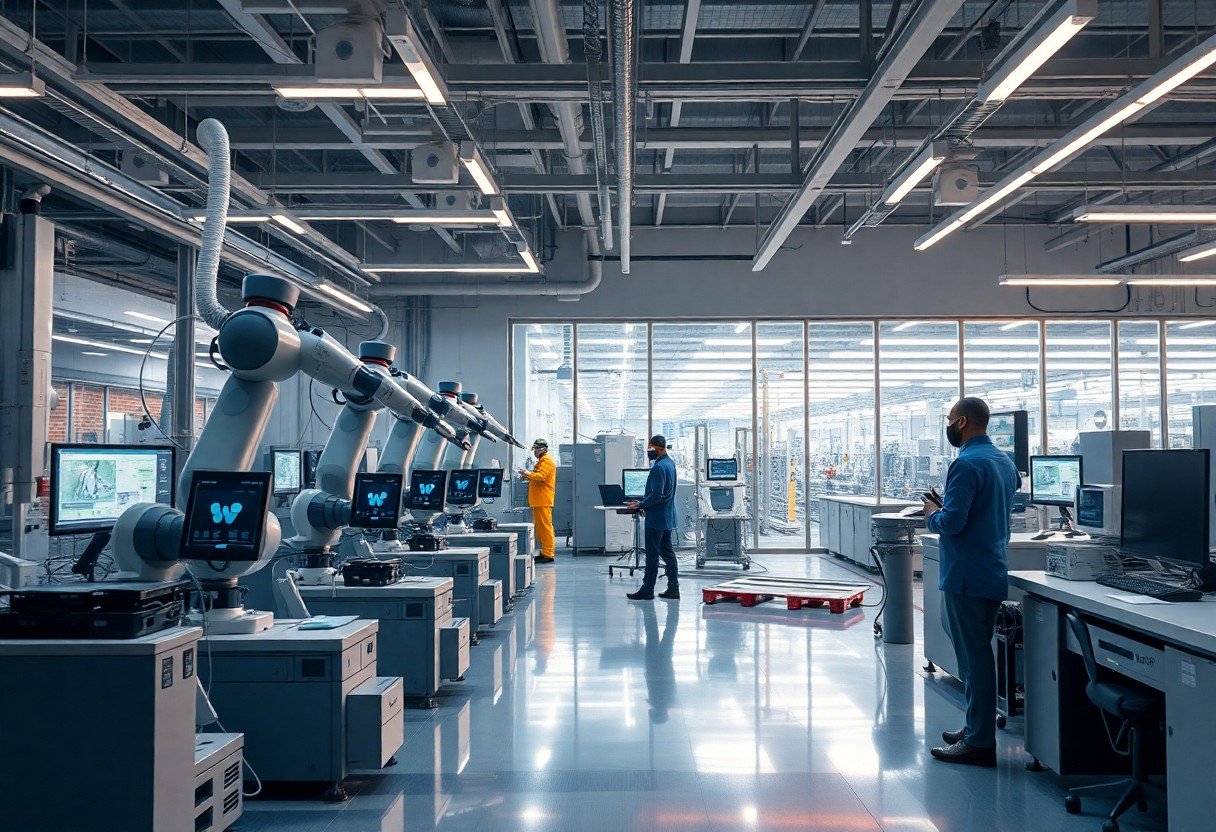
Many industries are witnessing a significant shift as AI technology evolves and begins to reshape the manufacturing landscape. In 2025, you will find that AI is optimizing processes, improving safety measures, and enhancing operational efficiency, while also posing potential challenges to traditional jobs. Understanding how AI integrates with manufacturing will empower you to adapt to these changes, ensuring that your business remains competitive and leverages innovative solutions effectively in a rapidly transforming environment.
Key Takeaways:
- AI is enhancing predictive maintenance, reducing downtime by enabling real-time monitoring of equipment health.
- Automation and robotics powered by AI are streamlining production processes, increasing efficiency and reducing labor costs.
- AI-driven analytics are improving supply chain management, leading to optimized inventory levels and demand forecasting.
The Rise of AI in Manufacturing
Historical Context of AI in Industry
You might find it fascinating that the roots of AI in manufacturing can be traced back to the early days of industrial automation. The introduction of programmable logic controllers (PLCs) in the 1960s marked a pivotal moment, allowing machines to perform tasks based on predetermined programming. This laid the groundwork for more sophisticated technologies that would eventually lead to the integration of AI. By the 1980s, expert systems began to emerge, enabling machines to mimic human decision-making processes and handle complex operations, although these systems were limited by the technology of the time.
As computer power increased in the 1990s and early 2000s, so did the capability of AI applications. Manufacturers started to realize the potential of AI to optimize production lines and enhance decision-making processes. With the advent of data analytics, companies began to collect and analyze data from their operations, leading to more informed strategies and approaches. The foundation for machine learning was established during this period, allowing systems to improve from data inputs and build predictive models that could foresee potential production issues.
The significant leap in AI technology came with the emergence of deep learning and neural networks in the 2010s. These advancements played a vital role in transforming how manufacturers approached quality control, supply chain logistics, and predictive maintenance. Today, industries are embracing AI not just as a tool, but as a core component of their operational strategy. This transition has effectively set the stage for a new era characterized by smart, interconnected systems that can adapt to changing conditions in real time.
Current Trends and Developments
The focus in manufacturing has shifted towards utilizing AI for data-driven decision making. Your facilities now incorporate AI algorithms to analyze vast amounts of production data, which helps in identifying inefficiencies and opportunities for optimization. Machine learning models enable predictive maintenance, allowing you to anticipate equipment failures before they occur, thereby minimizing costly downtime. Recent developments, such as the rise of digital twins—virtual replicas of your physical assets—are allowing for near-real-time monitoring and simulation, letting you test scenarios without disrupting actual operations.
Another notable trend is the integration of AI with the Internet of Things (IoT). Your machinery can now be equipped with sensors that communicate operational data back to centralized AI systems. This synergy not only enhances predictive modeling but also facilitates immediate adjustments to production processes based on incoming data. Companies that embrace this technology are seeing significant reductions in operational costs and improvements in product quality, establishing a competitive edge in the market.
Your workforce is also experiencing changes as AI technologies are integrated. Augmented reality (AR) paired with AI is being used to train employees more effectively. For instance, technicians wearing AR glasses can receive real-time instructions powered by AI, streamlining complex procedures with ease. The shift towards a more skilled, tech-savvy workforce highlights the importance of ongoing education and training, ensuring that employees can effectively leverage these advanced technologies to their advantage.
AI Technologies Revolutionizing Manufacturing
Machine Learning and Predictive Analytics
Machine learning (ML) has become a cornerstone of modern manufacturing by facilitating the conversion of vast datasets into actionable insights. You can leverage ML algorithms to predict equipment failures before they occur, which helps you minimize unplanned downtime and extend the lifespan of your machinery. For example, companies like Siemens have integrated ML into their manufacturing processes to analyze sensor data from machinery, enabling them to optimize maintenance schedules and reduce operational costs by up to 20%.
Moreover, predictive analytics empowers you to forecast demand more accurately and align production schedules accordingly. With advanced analytical tools, you can analyze historical sales data, customer behavior, and market trends to make better-informed decisions. This predictive capability allows you to reduce excess inventory and optimize the supply chain, resulting in significant cost savings. A study shows that firms employing predictive analytics can achieve a 15% improvement in inventory turnover, leading to enhanced cash flow.
As your operations evolve, integrating machine learning with other AI technologies opens new avenues for innovation. For instance, combining ML with vision systems enables you to automate quality control processes, where algorithms detect defects on the assembly line in real-time. This not only improves product quality but also reduces waste. Companies that have embraced this technology are reporting a 30% reduction in quality-related costs due to increased accuracy in defect detection.
Robotics and Automation
Robotics and automation are at the forefront of manufacturing transformation, enabling you to enhance productivity and safety. Collaborative robots (cobots) are designed to work alongside human workers, allowing you to streamline production processes while ensuring a safer work environment. By automating repetitive tasks, you release your workforce to focus on more complex, value-added activities, which can lead to increased job satisfaction and innovation within your company.
In terms of efficiency, automated systems can operate around the clock, significantly amplifying output. For instance, automotive manufacturers have reported productivity increases of up to 40% after implementing robotic solutions for tasks such as welding and painting. Such efficiency not only drives profit margins but also ensures consistency in product quality, allowing you to meet customer expectations consistently.
As technology advances, robotic systems are becoming more intelligent. They can adapt to changes in the production process and learn from their surroundings. For example, companies like ABB are deploying autonomous mobile robots (AMRs) that can navigate complex environments and optimize material handling without the need for extensive programming. These robots facilitate just-in-time production processes, ensuring that materials are available precisely when needed, further minimizing waste.
Automation, particularly when combined with AI, allows for unparalleled scalability in your manufacturing processes. With the ability to adjust operations rapidly in response to market demand, you can maintain competitiveness in an ever-changing landscape.
Internet of Things (IoT) Integration
The integration of the Internet of Things (IoT) in manufacturing is transforming how you connect and manage your production systems. IoT devices facilitate real-time data collection from machinery, enabling you to monitor performance continuously. This capability allows you to detect anomalies in machine behavior, access live updates, and make informed decisions without the need for manual checks, significantly reducing inefficiencies.
By employing IoT technology, you can gain insights into energy consumption and machine utilization, which aids in identifying areas for optimization. According to a Deloitte report, organizations leveraging IoT in manufacturing can save up to 30% on energy costs. This type of real-time visibility empowers you to implement energy-saving measures, contributing to sustainability goals while also enhancing operational efficiency.
The data generated from IoT devices also plays a pivotal role in decision-making. You can aggregate data from various sources, leading to better forecasting and inventory management. For instance, integrating IoT with your Enterprise Resource Planning (ERP) systems allows you to synthesize information across departments. This interconnectedness encourages a holistic approach to resource allocation, ultimately resulting in a more streamlined operation.
As IoT technology progresses, you’ll find that its applications extend beyond immediate monitoring. Predictive analytics derived from IoT data can proactively inform maintenance schedules, enabling condition-based maintenance strategies that mitigate unexpected failures.
Advanced Manufacturing Techniques
Advanced manufacturing techniques, driven by AI innovations, are reshaping your operational capabilities and efficiency. Techniques such as additive manufacturing or 3D printing allow for rapid prototyping and reduced material waste. You can create complex geometries previously unattainable with traditional manufacturing methods, leading to innovative product designs and faster time-to-market.
Smart manufacturing encompasses various approaches, including digital twins, which provide digital replicas of physical systems. This technology enables you to simulate production processes and foresee potential issues before they arise. By continuously analyzing the digital twin against actual performance, you can refine your operations dynamically and optimize resource allocation.
Furthermore, integrating AI in your advanced manufacturing processes promotes agility and customization. Manufacturers can respond to shifting market demands with tailored solutions, thus enhancing customer satisfaction. For example, companies like GE are using AI-enhanced additive manufacturing to produce bespoke components for clients quickly while reducing lead times and costs.
- 3D Printing for customization and rapid prototyping.
- Digital Twins for real-time monitoring and process simulation.
- Agile manufacturing systems for responsive production.
| Advanced Manufacturing Techniques Benefits | Details |
|---|---|
| Cost Reduction | Lower material waste and rapid prototyping minimize expenses. |
| Increased Efficiency | Digital twins enable optimized production schedules and resource use. |
| Enhanced Customization | Ability to tailor products to specific customer needs quickly. |
Advanced manufacturing not only streamlines operations but also positions you for sustained growth in a competitive landscape. The ongoing integration of AI into these techniques will continue to push the boundaries of innovation, making your business more agile and responsive to change.
- Increased flexibility in production capabilities.
- Improved product quality through precise manufacturing techniques.
- Faster product development cycles leading to competitive advantage.
| Impact of Advanced Manufacturing | Metrics |
|---|---|
| Production Speed | Enhancements lead to decreased time-to-market. |
| Supply Chain Optimization | Better align production with market demands, reducing waste. |
| Innovation Rate | Encourages companies to experiment with new products and processes. |
Enhanced Production Efficiency
Real-Time Monitoring and Data Analysis
In 2025, real-time monitoring and data analysis systems, powered by AI, have become indispensable in manufacturing environments. These systems allow you to track every aspect of production processes, from machinery performance to employee efficiency, all in real time. For instance, AI-based platforms can analyze sensor data from machines, predicting anomalies before they escalate into significant problems. You now have visibility into production lines, enabling immediate responses to any disruptions while improving overall workflow. This level of insight means you can make informed decisions rather than relying on historical data, providing a substantial edge over competitors.
Consider a factory that implements AI-driven analytics. You can adjust production schedules based on live data, optimizing your resource allocation effectively. If an after-hours machine alerts you to a slight temperature deviation, your team can investigate it immediately, preventing potential failure and production loss. The capability to utilize big data analytics enables you to identify patterns and trends that were previously obscured, allowing for proactive management rather than reactive strategies.
Moreover, with continuous data analysis, predictive maintenance becomes a reality. By focusing not just on resolving issues but anticipating them, you can significantly enhance the lifespan of your equipment. Real-time dashboards that aggregate data can show key performance indicators, providing you with actionable insights at a glance. This constant vigilance ensures that you maximize your production capabilities, keeping you ahead in the competitive landscape.
Reduction of Downtime and Maintenance Costs
Reducing downtime and maintenance costs is one of the most significant benefits that AI brings to modern manufacturing. By leveraging machine learning algorithms, you can predict when a machine is likely to fail, allowing for maintenance to be scheduled precisely before issues arise. This drastically cuts down on unexpected breakdowns that can halt production. For instance, predictive analytics can help you identify which machines wear out more rapidly, enabling you to invest in replacements or repairs at the optimal time, ultimately leading to lower costs and increased productivity.
For example, a manufacturing plant that employs AI-driven maintenance scheduling can see a reduction in downtime rates by as much as 30%. This is critical for maintaining high productivity levels and ensuring that the supply chain operates smoothly. By minimizing the time machines spend offline, you effectively increase your output capacity without requiring additional operational hours or labor, translating directly to improved profitability.
Additionally, the optimization of maintenance strategies based on real-time insights allows you to allocate your budget more effectively. Instead of following a standard maintenance schedule that may lead to over-servicing some machines while ignoring others, you can tailor your approach. By doing so, you not only reduce unnecessary maintenance costs but also extend the lifespan of your equipment, resulting in long-term savings.
With AI’s capabilities in predictive maintenance, you can avoid the high costs associated with complete equipment failure and emergency repairs. This smarter allocation of resources allows for more competitive pricing and better customer satisfaction, aligning with your business objectives.
Streamlining Supply Chain Management
Streamlining supply chain management has become increasingly efficient with AI technologies in 2025. You benefit from AI algorithms that analyze market trends, consumer behavior, and logistics data, providing a comprehensive view of your supply chain. This analysis enables you to forecast demand more accurately, ensuring that you minimize excess inventory while meeting customer needs promptly. Real-time insights allow you to adjust your inventory levels, preparing for fluctuations without overcommitting resources.
AI also facilitates seamless communication between various stakeholders within your supply chain. Automated systems can update suppliers regarding materials needed in real time, reducing lead times and optimizing delivery schedules. For example, you can utilize AI-driven platforms that automatically reorder materials when stock reaches a certain threshold, ensuring you never face production halts due to supply shortages. This level of integration leads to a more agile supply chain that can respond quickly to changes in demand or disruptions.
Moreover, risk management becomes more robust as AI tools assess potential disruptions in your supply chain, be it from geopolitical factors, natural disasters, or supplier reliability. With predictive capabilities, you can develop contingency plans that act before threats materialize, safeguarding your operations. This proactive approach to supply chain management empowers you to maintain consistent production and enhance customer satisfaction by meeting delivery commitments reliably.
AI-driven insights into supply chain operations allow you to constantly refine processes, making supply chain management not just reactive but a component of your overall business strategy.
Quality Control and Assurance
AI in Inspection Processes
AI-driven inspection processes revolutionize traditional quality assurance methodologies in manufacturing. Automated visual inspection systems utilize machine learning algorithms to identify defects with remarkable precision, often surpassing human capabilities. These systems analyze images captured by high-resolution cameras, applying various detection techniques to ensure that every product meets stringent quality standards. A notable implementation is seen in the automotive industry, where companies like BMW harness AI to inspect engine components, drastically reducing manual inspection time by up to 50%.
Implementing such AI systems allows you to increase inspection speed while enhancing accuracy. Instead of relying solely on human inspectors, whose performance can be inconsistent due to fatigue, AI models provide continuous, real-time analysis. You can rest assured knowing that even the smallest defects will be caught early in the production cycle. For instance, manufacturers adopting AI-powered quality control have reported a decrease in the defect rate by as much as 70%, significantly lowering the costs associated with recalls and returns.
Integration of AI into inspection processes does not stop at identifying defects. These systems also incorporate predictive analytics, which enables the anticipation of potential quality issues before they arise, based on historical data. You are empowered to take proactive measures, ensuring that the production lines remain efficient and defects are minimized. As these technologies evolve, the trend towards fully autonomous inspection systems becomes increasingly likely, paving the way for a future where quality is guaranteed from the onset of production.
Predictive Maintenance for Quality Improvements
Predictive maintenance stands as a key strategy for enhancing product quality by leveraging real-time data. By utilizing IoT devices equipped with AI algorithms, you can monitor equipment performance continuously and detect anomalies before they escalate into larger issues. These systems analyze operational data, identifying patterns that indicate potential failures, enabling you to schedule maintenance proactively rather than reacting after problems arise. This shift not only extends equipment longevity but also ensures that production quality remains consistent and reliable.
The impact of predictive maintenance on quality improvement is evident in industries such as aerospace and pharmaceuticals, where minute discrepancies can have serious consequences. Implementing AI in these fields has led to a 30% reduction in downtime while simultaneously boosting product quality. For example, aerospace manufacturers have adopted AI to predict engine malfunctions before they occur, ensuring operational readiness and adherence to rigorous safety protocols.
When you integrate predictive maintenance into your quality assurance processes, you effectively create a comprehensive ecosystem where machinery health directly correlates with product quality. The data-driven insights lead to smarter decision-making, allowing you to optimize maintenance schedules while minimizing disruption to production. This reliance on predictive analytics can significantly reduce the number of defective products reaching the market.
Feedback Loops for Continuous Improvement
Establishing feedback loops using AI not only enhances quality assurance processes but also fosters a culture of continuous improvement across manufacturing lines. By collecting data from various stages of production, you can create a comprehensive feedback system that provides real-time insights into performance metrics. Machine learning algorithms analyze this data, uncovering trends and inefficiencies that human analysts may overlook. This information enables you to make informed adjustments to processes and equipment, further enhancing quality outcomes.
The implementation of structured feedback loops often leads to rapid iterations and refinements in production methodologies. For instance, a case study involving a leading electronics manufacturer showcased a 25% increase in operational efficiency through the use of AI-generated insights derived from continuous data collection. Teams promptly addressed identified issues in product quality, leading to enhanced performance and compliance with industry standards.
Such systems create a dynamic environment where insights gained from real-time data become actionable improvements. You develop an agile manufacturing process that keeps evolving based on factual analysis, ultimately empowering teams to maintain high standards consistently. This proactive approach leads to sustained product excellence and customer satisfaction.
Workforce and Labor Dynamics
Reskilling and Upskilling Employees
Advancements in AI technology necessitate a significant shift in employee skill sets within the manufacturing sector. As machines take over repetitive tasks, you may find demands for highly specialized skills increasing. Training programs focusing on technical knowledge, data analysis, and AI management are becoming vital as you adapt to this new landscape. Companies are investing heavily in reskilling initiatives to ensure their workforce remains relevant and equipped for the future. For instance, a recent study revealed that over 75% of manufacturing firms anticipate needing new skills to fully leverage AI capabilities.
Implementing effective training programs requires a comprehensive approach. Your organization should consider partnerships with educational institutions and utilize e-learning platforms to facilitate the upskilling process. Moreover, the adoption of virtual reality (VR) training modules has gained traction, allowing employees to immerse themselves in simulated environments where they can practice new skills safely. In 2025, companies that prioritize these educational strategies are likely to see enhancements in productivity and employee satisfaction.
Through regular feedback and mentorship, continuous learning becomes embedded in the workplace culture. Support from management in fostering an environment of growth can significantly improve employee engagement. By investing in your team’s development, not only do you prepare them for future challenges, but you also create a more adaptable and resilient workforce, capable of navigating the complexities brought on by AI integration in manufacturing processes.
The Role of Human-AI Collaboration
Incorporating AI into manufacturing doesn’t mean that human roles will diminish; rather, it emphasizes collaboration between humans and machines. You will frequently find that AI tools serve as extensions of your capabilities, enhancing your decision-making and efficiency. Imagine a scenario where AI analyzes production data in real-time and offers insights that help optimize your workflow. This synergy allows you to focus on critical thinking and strategy, enhancing the overall effectiveness of operations.
The dynamic between humans and AI is evolving toward a symbiotic relationship. For example, AI can monitor machinery and alert you to potential failures before they escalate. This proactive approach helps minimize downtime and maintain productivity. As you collaborate with AI systems, you gain access to analytical capabilities that empower you to make informed decisions rapidly. Moreover, your creativity and problem-solving skills complement AI’s computational strengths, driving innovation and process improvement.
Real-world applications of this collaboration are already underway in numerous manufacturing firms. A notable case is the integration of AI-driven robotics in assembly lines, where workers oversee and collaborate with machines to ensure quality and efficiency. You may discover that as AI continues to advance, embracing this collaboration will become vital for maintaining a competitive edge in the industry.
Additional insights into human-AI collaboration indicate that ongoing training will further enhance this relationship. With continuous advancements in AI, you will need to stay abreast of the latest developments in technology, ensuring that your skills evolve alongside the tools you utilize.
Impacts on Employment Structures
The integration of AI into manufacturing is reshaping traditional employment structures in various ways. Job roles are likely to become more specialized, with clear distinctions between those focused on oversight and strategy and those involved in direct technical operations. Traditional roles may evolve, requiring you to adapt quickly to new responsibilities that emphasize critical thinking, creativity, and strategic oversight. You might find yourself moving from a purely manual role to one that involves monitoring and enhancing AI performance, ensuring that the systems operate efficiently.
The shift toward automation and AI also raises questions about workforce size and job security. While some positions may disappear, new opportunities will emerge in machine maintenance, data analysis, and AI system management. Reports suggest that by 2025, approximately 2.1 million jobs could be created in the manufacturing sector due to advancements in technology, balancing the scales of job displacement and creation. Thus, embracing change becomes vital as you aim to position yourself favorably in a rapidly transforming job market.
Furthermore, organizations adopting AI technologies are rethinking hiring practices, focusing on soft skills alongside technical expertise. Companies are prioritizing candidates who exhibit adaptability, problem-solving abilities, and a willingness to learn. This emphasis on holistic skill sets reshapes how you approach your career development, requiring you to continually refine both soft and hard skills to navigate the evolving landscape of employment structures in manufacturing.
Understanding these impacts on employment structures enables you to better prepare for your career in an AI-augmented manufacturing world. By recognizing the necessity for adaptability and an emphasis on continuous learning, you position yourself for success in this dynamic environment.
Case Studies in 2025
- Siemens implemented AI-driven predictive maintenance, reducing unplanned downtime by 30% across its assembly lines.
- GE Aviation utilized machine learning algorithms to streamline supply chain logistics, cutting costs by 15% and improving delivery times.
- Toyota adopted AI for quality control, achieving 99.5% accuracy in defect detection, significantly enhancing product quality.
- Boeing integrated AI in its production processes, resulting in a 25% reduction in manufacturing cycle time.
- ABB leveraged AI for energy management, reducing energy consumption in factories by 20%.
- Ford used AI-powered robots in assembly, increasing throughput by 40% while maintaining safety standards.
- Caterpillar deployed AI for equipment diagnostics, lowering maintenance costs by 50% year-over-year.
Industrial AI market: 10 insights on how AI is transforming … offers further exploration into these impactful case studies.
Industry Leaders Embracing AI
Leading manufacturers are increasingly adopting AI to enhance operational efficiency and competitiveness. For instance, Siemens’ integration of AI in its manufacturing processes showcases a commitment to innovation and productivity. The company has implemented advanced analytics to monitor machine health, enabling a shift from reactive maintenance to proactive strategies. By doing so, your entire manufacturing workflow becomes less prone to disruptions, allowing greater consistency in production while significantly decreasing operational costs.
Similarly, GE Aviation’s use of AI not only optimized their supply chain logistics but also reinforced their position in a highly competitive sector. With the implementation of machine learning algorithms, you can now derive insights from vast amounts of data, promoting more strategic decision-making. This led to improved delivery times and reduced costs, ensuring that GE remains an industry leader while providing higher value to its customers.
Toyota has also redefined manufacturing practices through AI. Their approach to quality control, utilizing AI for defect detection, sets a benchmark in achieving remarkable accuracy levels. As a manufacturer, this translates to reduced waste and increased customer satisfaction, highlighting the direct impact of AI on both productivity and product quality. By leveraging AI, you can successfully navigate the complexities of modern manufacturing tasks.
Lessons Learned from Successful AI Implementations
Successful AI implementations reveal key lessons crucial to maximizing your manufacturing potential. Firstly, investing in data infrastructure is non-negotiable. Businesses like Boeing learned that robust data collection methods and analytics engines are critical for AI deployment. Properly structured data increases the effectiveness of machine learning models, leading to improved operational insights and predictive capabilities. Ensuring data quality will optimize your AI solution, producing more reliable results and driving better decision-making.
Another vital lesson is the importance of cross-functional collaboration. Organizations such as ABB emphasize aligning IT and operational teams throughout the AI adoption process. This collaborative approach accelerates implementation timelines and enhances the skills of your workforce in AI technologies. Training employees not only fosters a culture of innovation but significantly contributes to seamless transitions into AI-driven methodologies.
Lastly, tailoring AI solutions to specific operational needs significantly boosts the effectiveness of the technology. Following Toyota’s example, your approach should involve customizing AI applications to address unique challenges within your manufacturing environment. Understanding your specific requirements will lead to higher adoption rates and better outcomes, ensuring AI serves as a powerful tool rather than a temporary trend.
Challenges Faced and Overcome
AI adoption in manufacturing does not come without obstacles. Initial capital investment remains a significant concern for many companies, particularly smaller enterprises. Implementing AI solutions requires substantial funding, which can deter potential adopters. Forward-thinking organizations have circumvented this barrier by taking a phased approach, allowing them to spread costs over time and gradually realize the benefits of their investments without overwhelming financial risk.
Integration with existing systems poses another challenge. Many manufacturers struggle to mesh new AI technologies with legacy systems, causing inefficiencies that can hinder productivity. By prioritizing system interoperability, companies have successfully navigated this issue. For instance, firms like Ford have developed APIs that allow various systems to communicate effectively, enhancing data flow, and ensuring that AI applications function optimally within their operational structures.
Data security concerns also play a critical role in the challenges faced during AI implementation. With the growing reliance on data, manufacturers must invest in cybersecurity measures to protect sensitive information. Techniques such as data anonymization and implementing robust access controls are now key strategies for firms like Caterpillar, allowing secure operation while still leveraging the full potential of AI systems.
Summing up
Drawing together the insights on how AI is transforming manufacturing in 2025, you will realize that the integration of advanced technologies is reshaping traditional practices in remarkable ways. You can observe that automation and smart systems are enhancing productivity levels, enabling manufacturers to achieve more with fewer resources. Your understanding of AI’s role in predictive maintenance illustrates how machinery can now self-diagnose issues, thereby reducing downtime and extending equipment lifespan. This proactive approach not only optimizes operations but also significantly lowers costs, allowing you to reallocate resources toward innovation and growth.
As you look towards the future, you should take note of how AI-driven data analytics is revolutionizing decision-making processes in manufacturing. By leveraging large volumes of data, you can identify trends and make informed choices that enhance efficiency and product quality. Your ability to personalize offerings based on customer insights is strengthened, leading to greater satisfaction and loyalty among your clientele. The shift towards data-centric strategies empowers you to remain competitive in an ever-evolving marketplace, fostering adaptability that is vital for success in 2025 and beyond.
Ultimately, the subtle but profound transformations brought about by AI in the manufacturing sector are evident. You can appreciate the importance of continuous learning and adaptation to keep pace with these innovations. As you embrace these changes, it is clear that the journey towards a more intelligent, automated manufacturing landscape is not just inevitable but also beneficial. By staying informed and proactive in your approach, you position yourself at the forefront of a new era in manufacturing that promises to redefine efficiency, quality, and profitability.
FAQ
Q: How is AI improving production efficiency in manufacturing by 2025?
A: AI enhances production efficiency through automation of repetitive tasks, predictive maintenance, and real-time data analysis. These technologies minimize downtime and optimize resource allocation, leading to faster production cycles and reduced operational costs.
Q: What role does AI play in supply chain management by 2025?
A: AI improves supply chain management by forecasting demand, optimizing inventory levels, and automating logistics. Machine learning algorithms analyze historical data to identify patterns, enabling manufacturers to make informed decisions that enhance efficiency and reduce waste.
Q: How is AI contributing to product quality in manufacturing by 2025?
A: AI contributes to product quality by implementing advanced quality control systems that utilize machine vision and deep learning. These systems detect defects in real-time during the manufacturing process, ensuring higher standards of production and lowering costs associated with returns and rework.
No responses yet